

MedTech
From medical technology concept to clinical practice
Bringing a medical technology into real clinical use takes more than a good device. It takes clear requirements, rigorous evaluation, regulatory awareness and careful integration. We support hospitals, innovators and technology organisations at each stage of that journey.
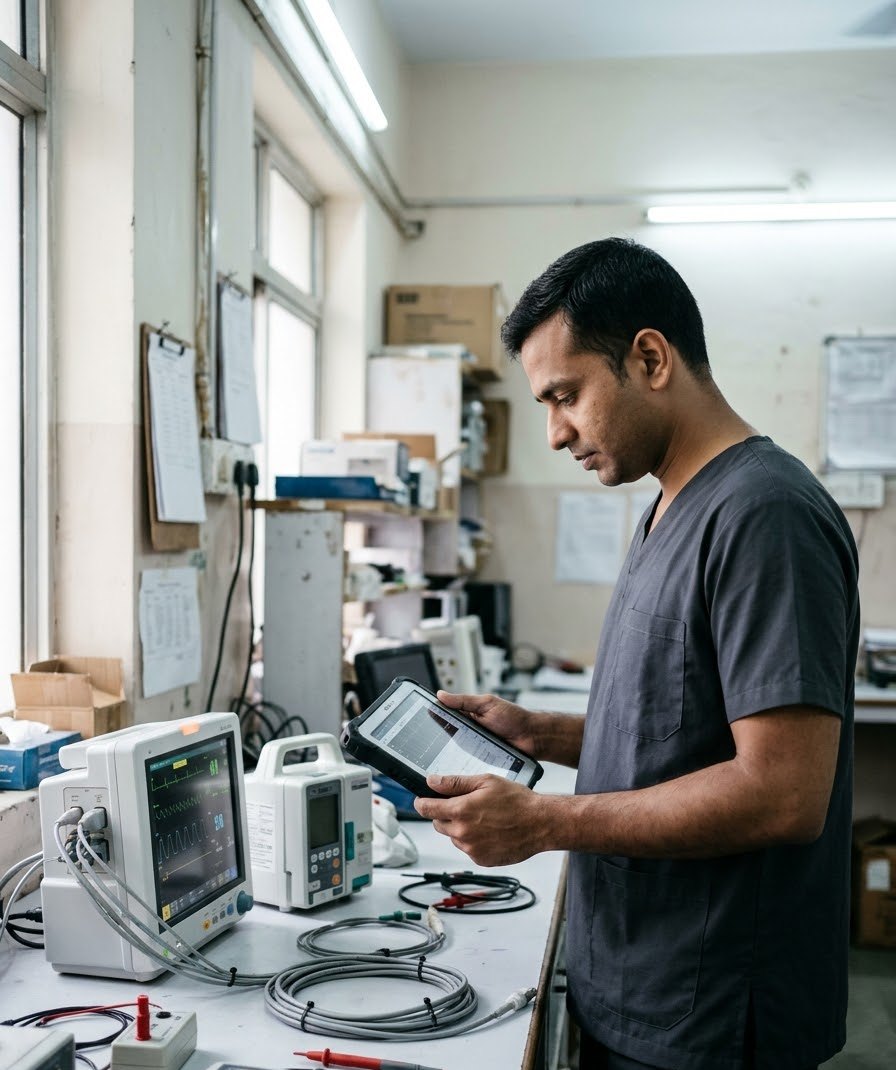 Fig. 02 — MedTech
Our MedTech services focus on the practical questions around medical devices, digital health tools and connected clinical technologies: what is needed, whether it works as intended, how it fits the clinical environment and how it can be adopted safely.
Hospital procurement and biomedical engineering teams, clinical department heads, medical device innovators and start-ups, technology companies entering healthcare, and incubators and accelerators.
Challenges we address
- 01Uncertainty about which technologies suit a particular clinical setting
- 02Difficulty evaluating devices objectively against clinical needs
- 03Complex regulatory and quality expectations for developers
- 04Integration of devices with hospital information systems
- 05Gaps between prototype and clinically usable product
- 06Staff training and safe, consistent use after procurement
Services we offer
Needs assessment and technology scouting
Identifying clinical needs and reviewing suitable technology options.
Evaluation and usability studies
Structured assessment of performance, usability and workflow fit.
Product development advisory
Support for innovators on requirements, prototyping approach and clinical input.
Regulatory and quality guidance
Orientation on applicable regulatory pathways and quality management expectations.
Integration support
Planning how devices and digital tools connect with clinical systems and data flows.
Adoption and training
Training plans and clinical onboarding for safe, consistent use.
University Consultancy